

Personalised Early Interventions and Group Work
At Calm Together, we offer tailored support for children and families in Lancashire. Discover our unique, relationship-based approach that helps children thrive in environments where they feel most comfortable.We cover EBSA, SEMH, Anxiety ,overwhelm and sensory.
Enquire about our services:
We offer free initial consultation , free advice and guidance along with resources for parents and guardians.
We offer our services to schools in Lancashire, get in touch for our price list.
calmtogether@yahoo.com
Contact Number: 07889990586
Our Specialised Support
We provide a range of focused services designed to meet the unique needs of your child and family. From emotional regulation to ADHD support, our interventions are practical, consistent, and meaningful.
How Calm Together Supports Emotional Regulation
At Calm Together, we understand that emotional regulation is a key aspect of personal development and social interaction. Emotions play a pivotal role in our daily lives, influencing how we think, act, and interact with others. With the right tools and understanding, anyone can navigate their emotions more effectively, fostering healthier relationships and improving overall well-being. Calm Together provides practical strategies to help individuals identify and understand their emotions, paving the way for better emotional regulation.
The Importance of Social Skills
Social skills are essential in applying emotional regulation effectively. They involve the ability to communicate, empathise, and navigate social situations with ease. Developing these skills enables us to express our emotions constructively, listen actively to others, and engage in meaningful conversations. Strong social skills also promote better conflict resolution and foster a supportive environment for both ourselves and those around us.
Supporting Children with Challenging Behaviour
At Calm Together, we understand that challenging behaviour often comes from deeper emotional triggers. Through emotional coaching, we help children recognise these feelings and develop personalised coping strategies. By actively listening and creating space for open communication, we encourage children to express themselves without fear of judgment and build trust.
We use engaging activities and interactive tools to teach skills like mindfulness, helping children pause, reflect, and respond more calmly. These techniques support immediate behaviour management while strengthening long-term emotional resilience.
Working closely with parents and teachers, we create consistent support across home and school. We believe that understanding behaviour is a journey, and we’re committed to guiding children and families every step of the way—turning difficult moments into opportunities for growth and connection.

Alternative Provision
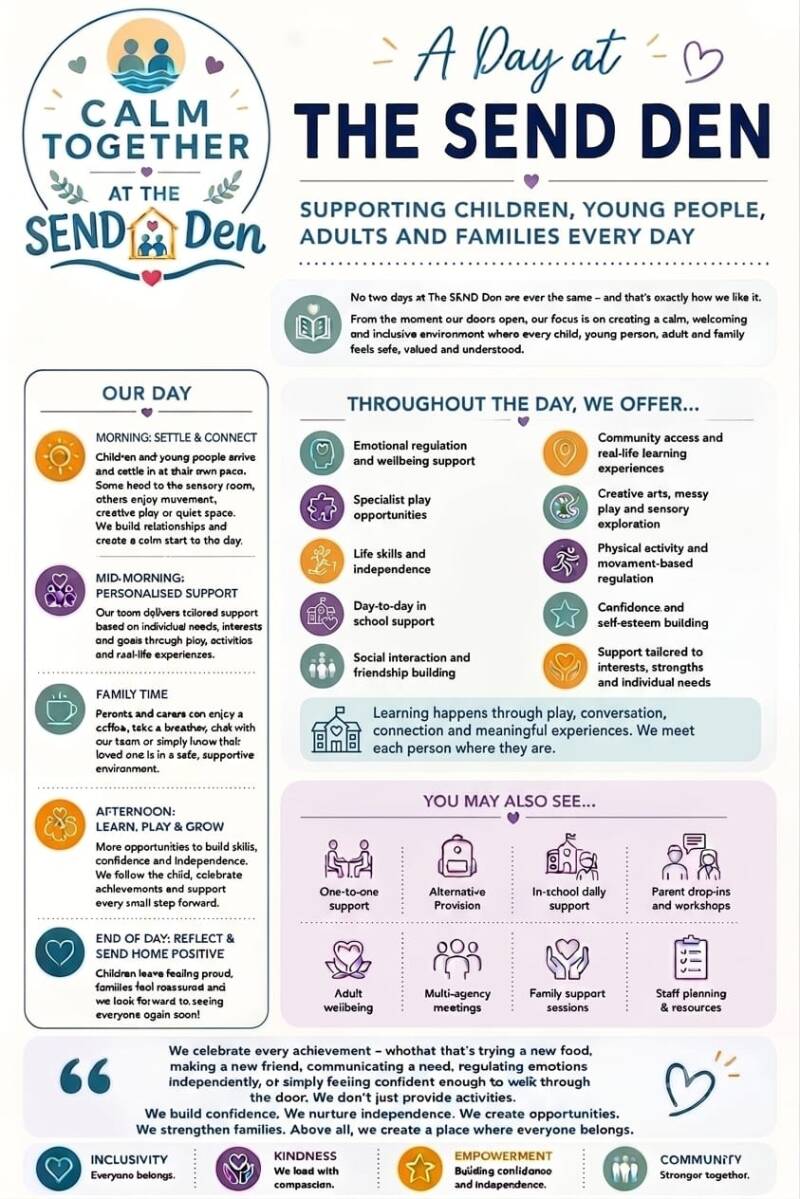
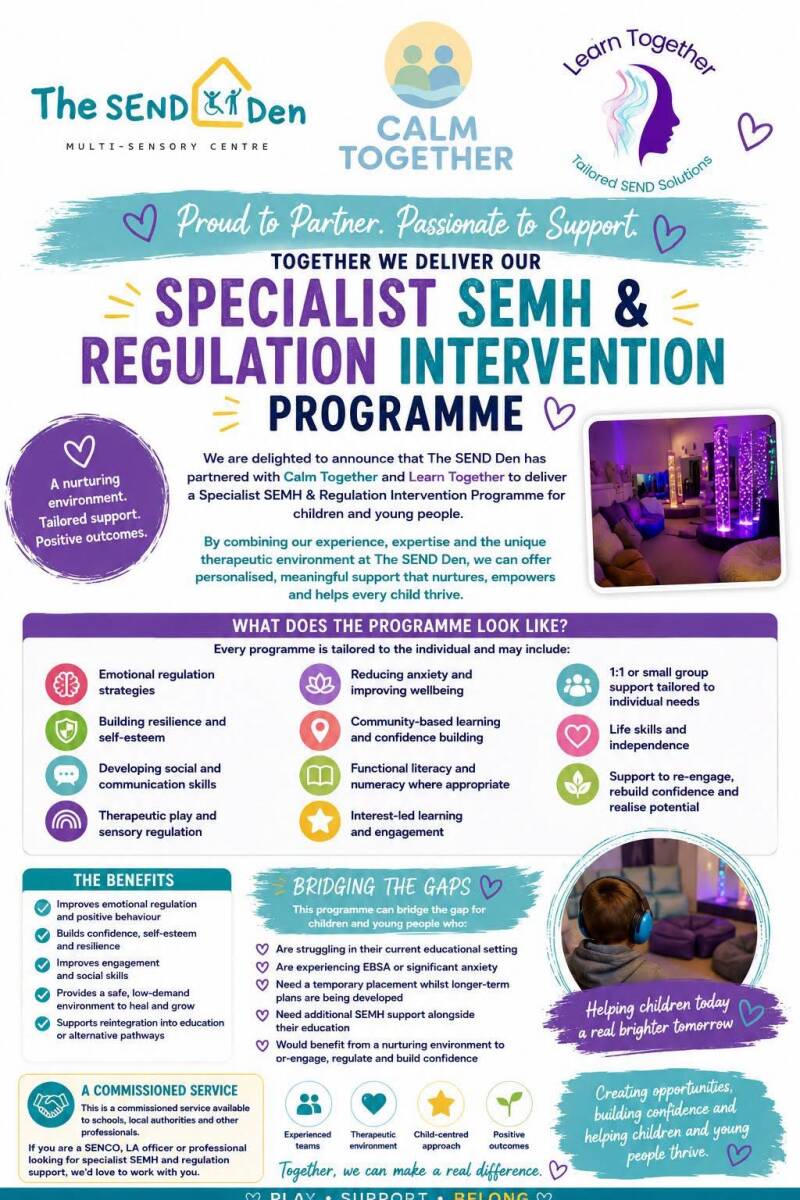
Exciting Partnership: Alternative Provision at The SEND Den
We are fortunate to announce our collaboration with The SEND Den, enabling us to offer alternative provision for children with Section 19s and Education Otherwise Than At School (EOTAS) Plans. This partnership allows us to provide a supportive and tailored educational environment for these students at The SEND Den.
Who benefits from our support?
We mainly work with children ages 4 - 25, although we can support slightly younger depending on their needs. Our services are especially beneficial for children who:
- Struggle with emotional regulation, frequent meltdowns, anger, frustration, or becoming easily overwhelmed.
- Show signs of ADHD, whether diagnosed or suspected — including impulsivity, inattention, or difficulty managing routines and transitions.
- Display challenging behaviour at home or in school, where behaviour may be misunderstood but is often a way of communicating unmet needs.
- Experience anxiety or worries, including school anxiety, separation worries, or intrusive thoughts.
- Have low confidence or self-esteem, children who may be withdrawn, lack belief in themselves, or struggle socially.
- Find school difficult, including children at risk of exclusion, struggling to engage, or finding the classroom environment overwhelming.
- Need a safe space to talk and be understood.
Positive changes to expect
Families using our services can expect remarkable transformations for their children, including:
- Better emotional regulation, as children begin to understand their feelings and use strategies to stay calmer.
- Fewer meltdowns and outbursts, with children expressing themselves in safer, more manageable ways.
- Increased confidence and self-esteem, as children start to feel more positive about themselves and their abilities.
- Improved behaviour at home and in school, addressing root causes for more settled and consistent behaviour.
- Stronger communication skills, as children learn to talk about their feelings, needs, and worries more openly.
- Reduced anxiety and worries, gaining coping strategies to manage anxious thoughts and feel more secure.
- Better engagement in school, helping children focus, participate, and cope with the school day.
- Children thriving instead of coping!
